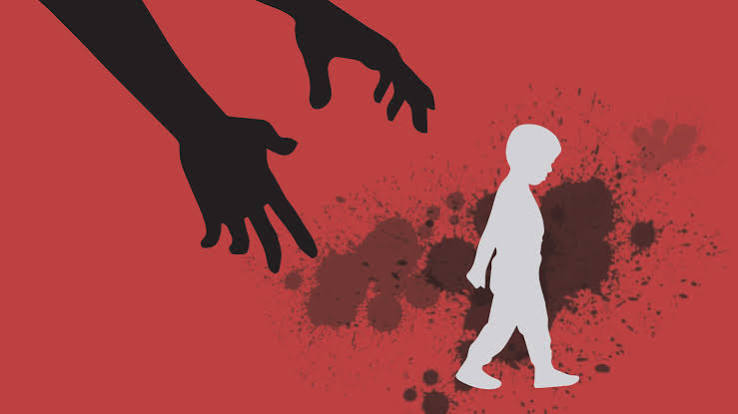
The nearly six-minute video depicts a teacher brutally beating several children. While the exact location and authenticity of the footage could not be independently verified, the scenes are harrowing enough to unsettle any conscious mind. Beyond the immediate shock of how an educator could inflict such cruelty in the name of discipline, a much larger systemic question arises—who oversees these institutions when such abuses occur?
This is not merely an isolated incident involving a single teacher or a specific madrasa. Rather, it exposes a long-unaddressed crisis regarding child protection, oversight, and institutional accountability within Bangladesh’s Qawmi madrasa education system.
A Vast Population Left Unchecked
Qawmi madrasas are an integral part of Bangladesh's social and educational landscape. Millions of children across the country are enrolled in this stream, with a significant number residing in residential facilities. A vast majority of these students come from impoverished, underprivileged, or orphaned backgrounds. Facing financial hardship, many parents enroll their children in madrasas, believing they will receive religious and institutional education, regular meals, and a safe environment to grow into upright individuals.
However, when these very children face physical and psychological abuse at the hands of their teachers, where are they supposed to turn for justice?
According to Befaqul Madarisil Arabia Bangladesh (Befaq), the primary Qawmi education board, there are approximately 32,730 registered madrasas under its umbrella, catering to nearly 7 million students. Additional Qawmi boards oversee thousands more. Given that such a massive segment of the population relies on these institutions, the issue of child protection can no longer be ignored.
Regrettably, reports of physical punishment, harassment, and sexual abuse in madrasas have surfaced periodically in national media. Throughout 2025 and 2026, multiple news reports documented the arrests of madrasa teachers accused of sexual assault and child abuse in various districts.
While media allegations require impartial investigation and due process in a court of law, the recurring nature of these incidents makes it impossible to dismiss them as mere exceptions.
The Silence Surrounding Institutional Abuse
Understanding the true extent of child abuse in residential institutions remains exceptionally difficult. When a child lives away from their family, resisting or reporting abuse becomes an uphill battle. In many cases, young children fail to recognize that what they are experiencing is a crime. Fear of retaliation, threats of expulsion, social stigma, and anxiety over family reactions often force victims into silence.
Parents, too, hesitate to come forward. Raising allegations against religious institutions often invites social backlash or community pressure. Furthermore, reports frequently surface of local influentials or madrasa authorities attempting to settle serious offenses informally behind closed doors. Consequently, the actual number of abuse cases is widely feared to be far higher than what reaches the press.
Similarly, corporal punishment remains deeply entrenched despite legal prohibitions. Beating with canes, physical confinement, and humiliating treatment are regularly exposed through social media. This occurs despite a 2011 Supreme Court ruling declaring corporal punishment in educational institutions unconstitutional, followed by Ministry of Education directives banning physical and mental torture in all academic environments.
This raises a fundamental question: To what extent are these legal prohibitions enforced within Qawmi madrasas?
Constitutional Duty and the Myth of Exemption
No educational institution operates above the law when it comes to child rights. Whether a school is state-run, private, English-medium, or a Qawmi madrasa, every child under its care possesses equal constitutional rights.
The argument that Qawmi madrasas do not receive state funding or have historically operated outside direct government regulation does not relieve the state of its constitutional and moral duty to protect these children. Every student in a madrasa is a citizen of Bangladesh.
As a signatory to the United Nations Convention on the Rights of the Child (UNCRC), Bangladesh is internationally committed to safeguarding children from all forms of physical and mental violence, injury, neglect, and maltreatment. An institution’s religious identity or management structure cannot serve as a barrier to child safety.
It is equally crucial to avoid sweeping generalizations. It is neither accurate nor fair to label all Qawmi madrasas as places of abuse, nor should the dedication of thousands of sincere educators be overlooked. Millions of Qawmi teachers serve their students with utmost care and devotion. However, accountability must be enforced in institutions where abuse occurs. Individual criminality must not tarnish the entire system, nor should religious sentiment be exploited to grant perpetrators impunity.
The Path Toward Structural Reform
Establishing a robust and practical child protection framework within Qawmi madrasas is now an absolute necessity.
Safe Reporting Mechanisms: Every residential madrasa must feature a confidential and safe mechanism for children to report abuse. Allegations must be investigated immediately, and serious offenses must be reported to law enforcement without exception, with no room for informal compromises.
Teacher Training and Sensitization: Educators must receive formal training on positive discipline, child psychology, and non-violent classroom management. Bodies like the Islamic Foundation can play a pivotal role in facilitating these programs.
Board Accountability: Qawmi education boards must expand their scope beyond curriculum and examinations to actively oversee student safety and welfare. A centralized record-keeping system should be considered to prevent individuals convicted of child abuse from obtaining employment in other educational facilities.
Redefining Discipline: Society must stop mislabeling physical violence against children as "discipline." Islamic teachings emphasize compassion, affection, and gentle care toward children, drawing directly from the teachings of Prophet Muhammad (PBUH). Harsh physical punishment and humiliation hold no moral justification.
Parents send their children to madrasas with the hope that they will gain knowledge, moral values, and spiritual guidance. No parent sends a child away to suffer abuse or return home in a body bag.
This issue extends beyond the Qawmi madrasa system—it challenges our state, our society, and our collective conscience. Every child, regardless of whether they attend a school or a madrasa, whether wealthy or poor, orphaned or living with family, deserves equal protection under the law.
Relying on temporary public outrage following a viral video is no longer enough. What is required is long-term, coordinated action involving Qawmi authorities, education boards, religious leaders, child rights advocates, and government agencies.
A child's cry must never be weighed against an institution's reputation, and child safety can never be open to compromise. Ultimately, a state that fails to protect its youngest generation cannot claim true progress or development.