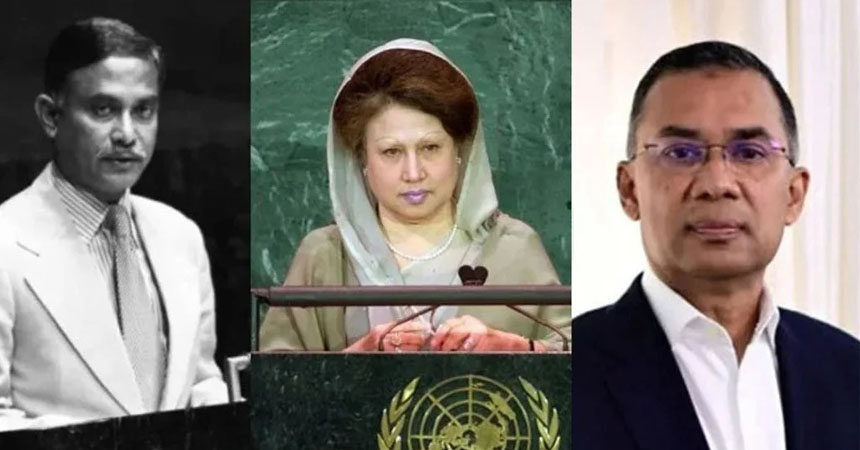
More than four decades ago, President Ziaur Rahman addressed the United Nations, raising questions about global inequality, poverty and the rights of developing countries. Thirteen years later, his wife and former Prime Minister Khaleda Zia spoke at the UN General Assembly, presenting Bangladesh’s positions on democracy, development, sovereignty and international cooperation.
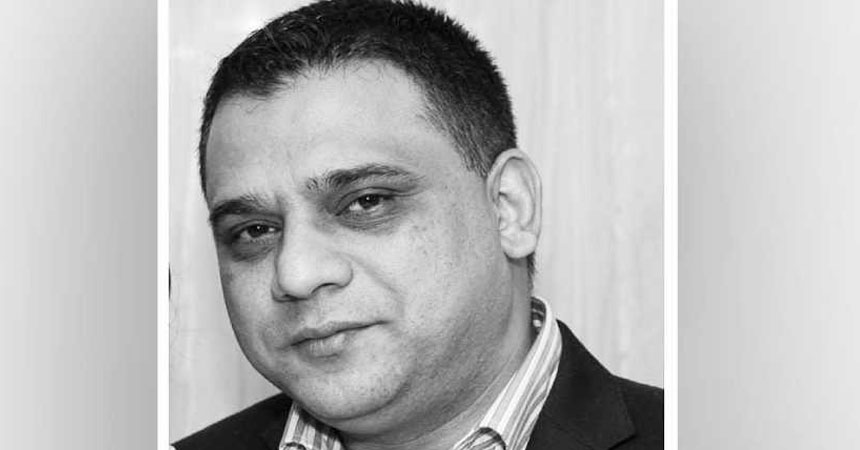
Now, their son, Prime Minister Tarique Rahman, is set to address the General Assembly for the first time on September 24, marking the third generation of the Zia family to speak on behalf of Bangladesh at the world body.
The significance of the speech goes beyond a regular diplomatic engagement. It comes as Bangladesh seeks to present its priorities on democracy, development, climate change, the Rohingya crisis, technology and multilateral cooperation at a time of major changes in the global order.
From economic justice to a changing world
The first chapter began in 1980.
On August 26 that year, Ziaur Rahman addressed the 11th Special Session of the UN General Assembly. His speech came at a time of global economic uncertainty, following the second oil crisis and amid growing concern over the widening gap between rich and poor countries.
Ziaur Rahman questioned why poverty and hunger continued despite international commitments to development and called for greater international economic cooperation. He also stressed self reliance and the need for developing countries to strengthen their own productive capacity while participating in the international system.
Bangladesh was then a relatively young and economically fragile state, still dealing with the consequences of the 1971 Liberation War, food insecurity and economic reconstruction.
The international debate at the time was heavily focused on the unequal structure of the global economy. Developing countries were seeking greater access to markets, development finance, technology and fairer terms of trade.
The debate also fed into the campaign for a New International Economic Order, which sought to reshape global economic relations between developed and developing countries.
Against that backdrop, Ziaur Rahman’s emphasis on development, economic justice, self reliance and international cooperation reflected the concerns of many developing countries.
Khaleda Zia’s turn
Thirteen years later, Khaleda Zia addressed the UN General Assembly on October 1, 1993, during its 48th session.
In her first UN speech, she highlighted democracy, development, human rights, national sovereignty and the security of smaller states. She also raised issues including river water sharing, environmental protection and the rights of refugees and displaced people. UN records confirm her appearance at the 13th plenary meeting of the 48th session.
Her engagement with the UN continued over the following years. She addressed proceedings connected to the UN’s 50th anniversary in 1995, the 27th Special Session on Children in 2002 and the 60th General Assembly session in 2005. UN records document multiple appearances during this period.
The issues Bangladesh raised on those occasions reflected the concerns of the period, including poverty reduction, development, democracy, terrorism, peacekeeping and the interests of developing countries.
A different Bangladesh in 2026
Tarique Rahman’s first UN address comes in a very different global environment.
He left Dhaka for New York on September 21 and is scheduled to deliver Bangladesh’s statement at the General Debate of the 81st UN General Assembly on September 24. The general debate is being held from September 22 to 28 under the theme, “Restoring trust, managing transformation: A United Nations that delivers for all.”
According to Foreign Secretary Asad Alam Siam, the prime minister’s speech is expected to cover Bangladesh’s democratic renewal, rule of law and accountability, global peace and security, climate change, sustainable development, economic cooperation, youth and women’s empowerment, education and health, the Rohingya crisis, equitable use of modern technology and reform of the multilateral system.
These priorities show how Bangladesh’s international concerns have evolved over the past four decades.
In 1980, the focus was largely on food, poverty, economic inequality, development assistance, trade and energy security.
In 2026, those issues remain relevant, but they have been joined by climate finance, adaptation, technological inequality, artificial intelligence, digital access, loss and damage, sustainable development and new forms of geopolitical competition.
Climate change moves to the centre
Climate change is expected to be one of the major themes of Tarique Rahman’s UN engagements.
On September 23, he is scheduled to attend the high level meeting on “Climate Action and the Just Transition”, convened at the initiative of UN Secretary General António Guterres. On September 24, he is scheduled to deliver opening remarks at a high level meeting on the existential threats posed by sea level rise.
Bangladesh is among the countries particularly vulnerable to climate impacts, despite its relatively small contribution to global greenhouse gas emissions. The World Bank estimates that tropical cyclones alone cause Bangladesh about $1 billion in economic losses annually. It has also warned of major long term risks from sea level rise, extreme weather and climate related displacement.
For Bangladesh, climate policy is therefore closely linked to agriculture, water security, livelihoods, coastal settlements and migration.
The international question has also evolved. Earlier debates focused heavily on fair trade and development assistance. Today, Bangladesh and other climate vulnerable countries are seeking greater access to climate finance, adaptation support, technology transfer and mechanisms to address loss and damage.
The Rohingya crisis
The Rohingya crisis will be another major issue during the visit.
Nearly a decade after the mass displacement of Rohingyas from Myanmar, around 1.2 million refugees are now living in Bangladesh, according to the United Nations. In May 2026, the UN and its partners appealed for $710.5 million to support Rohingya refugees and host communities in Bangladesh.
On September 23, Tarique Rahman is scheduled to attend a Bangladesh hosted high level side event on the Rohingya crisis, where he is expected to seek stronger international support for the refugees’ return to Myanmar. Bangladesh maintains that repatriation must be safe, voluntary, dignified and sustainable.
The issue has increasingly moved beyond humanitarian assistance. The prolonged presence of the refugees also affects Bangladesh’s economy, environment, local communities and border security.
Technology and the future of development
Technology represents another major difference between the international environment of 1980 and that of 2026.
Artificial intelligence, digital infrastructure and emerging technologies are rapidly reshaping economies and societies. But access to advanced technology, infrastructure, financing and skilled workers remains uneven.
For developing countries such as Bangladesh, the issue is not simply technological adoption. It is also about ensuring that the benefits of technological progress are distributed more equitably.
The government has indicated that equitable and inclusive access to modern technology will be among the issues raised in the prime minister’s address.
A significant moment for Bangladesh at the UN
Bangladesh enters the 81st General Assembly session with an additional diplomatic distinction.
Foreign Minister Khalilur Rahman was elected president of the 81st session of the General Assembly in June, securing 99 votes against 91 for Cyprus’ candidate Andreas Kakouris. He formally assumed the presidency when the new session opened in September.
As a result, Bangladesh’s prime minister will address the General Assembly while a Bangladeshi foreign minister presides over the session.
The combination gives Bangladesh an unusually visible role at this year’s UN gathering, although the significance of that role will ultimately depend on how effectively the country uses the diplomatic platform to advance its stated priorities.
From one generation to another
Seen through the history of the Zia family’s engagement with the United Nations, Tarique Rahman’s speech represents a continuation of a political family’s presence on the global stage.
Ziaur Rahman’s 1980 address came at a time when Bangladesh was seeking a stronger voice in debates over global economic inequality and development.
Khaleda Zia’s first address in 1993 came in a post Cold War environment in which democracy, development, sovereignty and the rights of smaller states were central concerns.
Tarique Rahman now faces a world shaped by climate change, prolonged humanitarian crises, rapid technological transformation, economic uncertainty and pressure on the multilateral system.
The questions have changed, but one central challenge remains: how can Bangladesh protect its national interests while engaging constructively with an increasingly complex international system?
His first UN address on September 24 will provide an early indication of how the new government intends to frame that challenge.
For Bangladesh, the speech will carry both historical symbolism and practical diplomatic significance. The past three decades of family association with the UN provide the backdrop. The substance of the message, and how it is followed by diplomacy and policy, will determine its significance for the country’s international engagement.