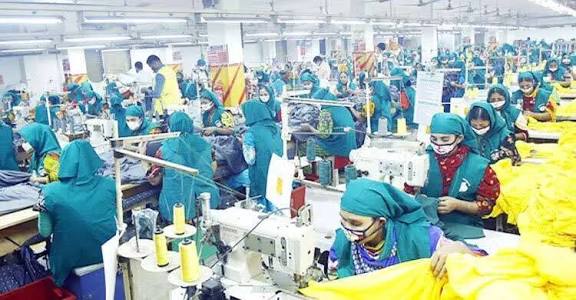
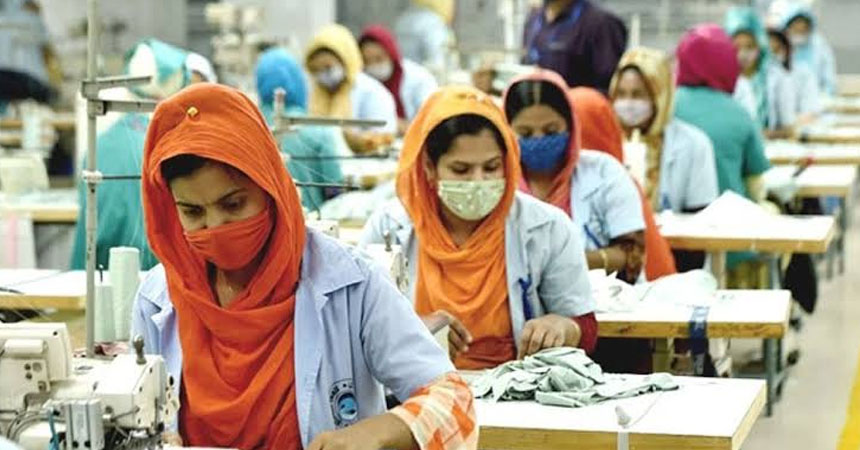
Foreign experts continue to dominate pivotal operational domains, including production management, merchandising, dyeing and finishing, quality control, compliance, industrial engineering, and liaison with global buyers. While industry insiders argue that expatriate specialists are indispensable for operating advanced machinery, boosting productivity, and satisfying rigorous international buyer requirements, the failure to cultivate sufficient local leadership after decades of industry maturity remains a central concern.
Scale of Expatriate Employment and Work Permit Trends
Official data indicates that while foreign professionals play a critical role, comprehensive tracking across sectors reveals varied numbers:
- Total Cross-Sector Expatriates: According to Fayzur Rabbi, Deputy Director of Invest Bangladesh, approximately 25,026 foreign nationals are officially employed across various sectors nationwide.
- EPZ Workforce: A.S.M. Anwar Parvez, Executive Director of the Bangladesh Export Processing Zones Authority (BEPZA), noted that 2,060 foreign nationals are employed within EPZs, primarily concentrated in merchandising and technical roles.
- BIDA Work Permits: The Bangladesh Investment Development Authority (BIDA) annual report for FY 2024–25 shows that 15,898 work permits were approved for foreign nationals, comprising 5,491 new approvals and 10,407 renewals. This compares to 5,761 new approvals and 9,947 renewals in FY 2023–24, indicating a slight decline in new issuances alongside an increase in renewals.
Industry Perspectives on Expatriate Reliance
Mohammad Khorshed Alam, Director of the Bangladesh Textile Mills Association (BTMA) and Chairman of Little Star Spinning Mills, points out that foreign professionals are heavily engaged in production supervision, dyeing, and technical operations, with nationals from India and Sri Lanka forming the largest contingent. He attributes this reliance to local gaps in handling modern machinery and advanced technology.
Comparing domestic efficiency with global standards, Alam noted that while local factories historically required up to 1,100 workers for baseline production, modernization has allowed efficient units to cut staff down to 350. He cited international benchmarks where a 54,000-spindle Chinese factory operates with merely 80 workers, underscoring the urgent need to bridge the domestic productivity gap.
Echoing this, Fazle Shamim Ehsan, Executive Vice President of BKMEA, emphasized that foreign experts are often brought in temporarily to install new technologies, train local teams, and elevate operational efficiencies—usually staying for one to two years. He estimates that the knitwear sector employs fewer than 100 foreign nationals, while the woven sector exceeds 150, with monthly salaries ranging between BDT 200,000 and BDT 1,000,000.
Salary Disparities and Corporate Governance Concerns
A study titled ‘Enrollment of Expatriates in the Ready-Made Garments and Textile Sectors of Bangladesh’ (conducted by Saiful Islam and Tasnim Nabila Islam) revealed that foreign officers in identical management roles can earn three to five times more than their local counterparts. For instance, foreign General Managers command monthly salaries between USD 5,000 and USD 10,000, whereas domestic officers in equivalent positions earn roughly BDT 150,000 to BDT 250,000.
Human resources professionals within the industry suggest that technical skill shortages are not the sole driver of foreign hiring. International buyers frequently exert preference or pressure for expatriate liaisons, restricting career advancement and leadership opportunities for qualified local managers. Allegations also persist regarding wage underreporting—where a foreign worker’s contractual paper salary is kept artificially low while the balance is disbursed in cash.
Governance Challenges, Tax Evasion, and Remittance Risks
Longstanding concerns regarding irregularities, tax evasion, and capital flight linked to foreign employment have been highlighted by Transparency International Bangladesh (TIB). In successive governance policy papers, TIB reported that some foreign nationals enter on tourist, visa-on-arrival, or business visas and work without proper work permits. Even among legally employed expatriates, underreporting actual salaries to evade income tax and utilizing informal channels (such as hundi) to remit funds abroad have been cited as major risks.
Official remittance figures released in Parliament in June 2024 by the then-Finance Minister Abul Hassan Mahmud Ali showed that foreign nationals remitted USD 130.58 million home during the first ten months of FY 2023–24 (July–April). Indian nationals remitted USD 56 million, Chinese nationals USD 14.56 million, and Sri Lankan nationals USD 12.71 million, alongside remittances from citizens of Japan, South Korea, Thailand, the UK, Pakistan, the US, and Malaysia. Under Bangladesh Bank guidelines, foreign workers are legally permitted to remit up to 80 percent of their net income after tax at any time.
Path Forward: Skill Enhancement and Localization Initiatives
Recognizing the need to reduce over-reliance on foreign expertise, industry bodies have ramped up vocational and professional training. Notably, BGMEA, BKMEA, the BGMEA University of Fashion and Technology (BUFT), and the Export Promotion Bureau (EPB) signed an agreement to train 22,815 workers, officers, and mid-level managers across three fiscal years in areas ranging from machine operation and compliance to inventory management and industrial leadership.
Advisors and policy spokespersons from the Prime Minister’s Office have similarly stressed that achieving a 100 percent domestic workforce in the RMG sector is entirely attainable by upgrading technical education, vocational training, and workplace standards.
Industry analysts conclude that while foreign specialists remain valuable for absorbing cutting-edge technology and global best practices, factories must institutionalize knowledge transfer. Establishing a centralized database for foreign employees, enforcing strict transparency in wage reporting and taxation, and systematically promoting local professionals to high-level technical and managerial roles will be essential to safeguarding the long-term competitiveness of Bangladesh's premier export industry.