
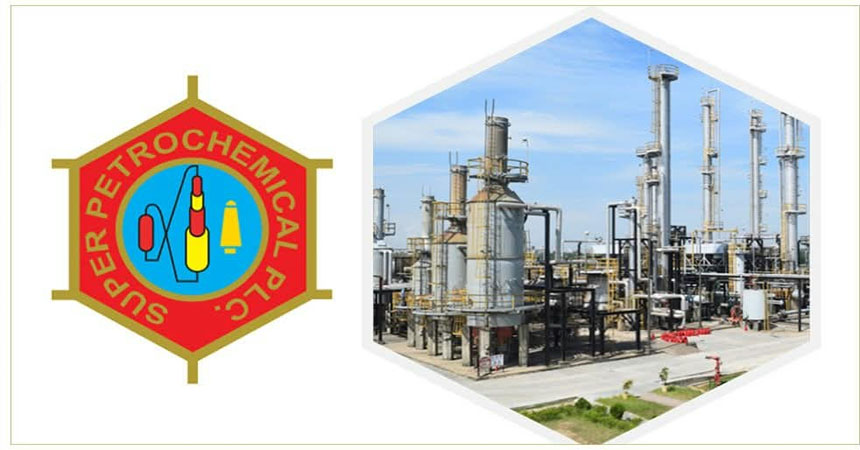
Government sources reveal that efforts are actively taking shape to bring the entity under official regulatory approval prior to completing a thorough investigation into its unauthorized imports and construction activities.
In response, the Bangladesh Petroleum Corporation (BPC) constituted a seven-member high-level inspection committee on Tuesday. Signed by BPC Secretary Shahina Sultana, the office order mandated the committee to conduct an on-site inspection of the refinery on Wednesday and submit an evaluation report to the BPC Chairman within three days.
According to the official directive, the committee is tasked with physically verifying whether Super Petrochemical PLC meets the prerequisite criteria outlined in the 'Policy on Setting Up Private Sector Refineries, Importing Crude Oil, Storage, Processing, Transportation, and Marketing-2023' formulated by the Energy and Mineral Resources Division.
However, senior BPC officials assert that the enterprise lacks the foundational authorization to establish a petroleum refinery. Despite explicit provisions under the 2023 policy strictly prohibiting the erection of refining infrastructure without prior governmental clearance, Super Petrochemical proceeded with full-scale facility construction.
Analysis of official documents indicates that beyond erecting physical structures, the company imported substantial machinery and industrial equipment without standard clearances. Industry observers have raised questions as to how such massive capital equipment passed customs barriers without mandatory regulatory permits, urging authorities to examine potential false declarations, duty evasion, or illicit contraband smuggling.
Operating a legitimate petroleum refinery in Bangladesh requires over 30 statutory approvals and clearings. These include clearances from the BPC, Bangladesh Bank, Department of Environment (DoE), Fire Service and Civil Defence, Department of Explosives, Department of Inspection for Factories and Establishments (DIFE), Office of the Chief Controller of Imports and Exports (CCI&E), and National Board of Revenue (NBR) Customs Bonded Warehouse licenses.
The BPC inspection committee is led by the General Manager (Commercial & Operations) of BPC as Convener, alongside the Manager (Commercial & Operations) as Member Secretary. Technical representatives include Deputy General Managers from Eastern Refinery PLC (ERPLC), GOPLC, MPPLC, and Assistant General Manager (Planning) of ERPLC.
Amid the ongoing controversy over statutory approvals, Super Petrochemical submitted a formal application to BPC seeking permission to import 1.2 million metric tons of crude oil annually—comprising 400,000 tons of light crude and 800,000 tons of heavy crude. In a communication dated October 27, the firm outlined a supply plan for 2027 to deliver 256,500 tons of octane, 119,000 tons of petrol, 466,500 tons of diesel, and 361,000 tons of High-Sulfur Furnace Oil (HFO) to BPC.
Technical experts have expressed concern over ambiguous distinctions made in the company's import documentation regarding condensate and light crude oil. Unlike crude oil extracted from oilfields, natural gas condensate is a liquid byproduct with distinct chemical properties, raising technical questions over process design and yield ratios.
Furthermore, discrepancies have surfaced across official corporate correspondence. While Chief Executive Officer Pranab Kumar Saha informed BPC on August 12 of plans to supply 1.203 million tons of refined products originating from a 35,000 barrel-per-day Crude Distillation Unit (CDU) set for commissioning in March 2027, an earlier letter sent to the Energy Minister on July 14 requested permission to import up to 2.0 million tons of Arabian Light Crude or UAE Marban Crude annually for the same plant.
Addressing the matter, BPC Chairman Dr. Md. Sher Ali stated that Super Petrochemical’s 1.2 million-ton crude import proposal is undergoing rigorous technical review. He acknowledged that while private enterprises have historically processed local and imported condensate under regulatory frameworks, the legal foundation, physical capability, and compliance profile of Super Petrochemical must be comprehensively audited prior to any executive decision.