Although new residential and commercial areas have expanded rapidly along the 300 Feet Road and around Purbachal, the number of filling stations has not increased at the same pace. As a result, residents often have to travel several kilometres to Kuril, Khilkhet or the Airport Road to refuel their vehicles.
The additional trips are increasing fuel consumption, wasting valuable time and adding unnecessary traffic to already busy roads in Kuril, Khilkhet and surrounding areas, residents said.
Abdullah Al Mamun, a resident of a housing project along the 300 Feet Road, regularly drives to filling stations in Kuril or along the Airport Road to refuel his vehicle.
“Two days ago, I went out to buy fuel after there were only a few litres left in my car. By the time I reached the station, half of the remaining fuel had already been consumed,” he said.
“If I had failed to get fuel for any reason, I could have run out of the remaining fuel and become stranded on the road. If there were enough filling stations nearby, we would not have to travel such long distances,” he added.
Residents said a large number of people now live in Bashundhara, Police Officers Housing Society, Naval Housing, Swadesh Sonali, Swadesh Sunvalley, United City and other residential developments stretching from Kuril along the 300 Feet Road towards the Purbachal project.
However, many of these residents remain dependent on relatively distant filling stations for their daily fuel needs.
In contrast, several filling stations are located along the roughly 1.5-kilometre stretch from Gulshan-Tejgaon Link Road to Satrasta, residents pointed out, highlighting what they describe as an uneven distribution of fuel infrastructure across the capital.
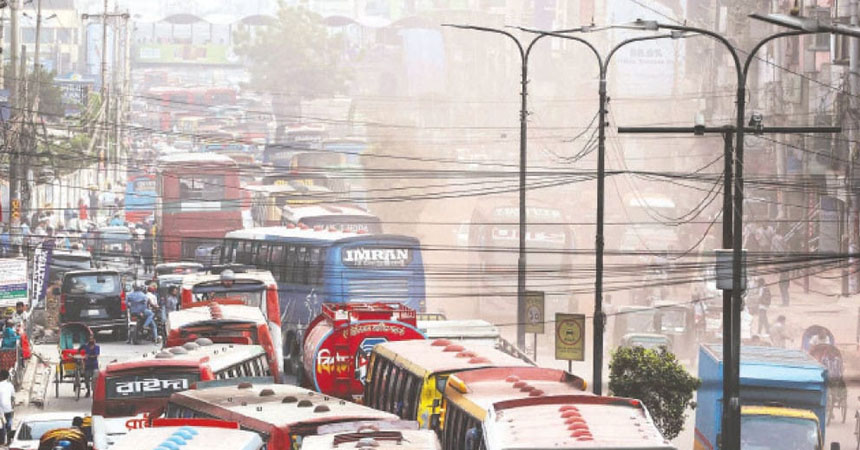
According to local residents, thousands of vehicles have to travel additional distances every day simply to collect fuel. This increases fuel costs and results in the loss of valuable working hours, while the additional traffic contributes to congestion on surrounding roads.
Local estimates suggest that some vehicles from the area have to travel more than 10 kilometres to Kuril, around 13 kilometres to Khilkhet and nearly 18 kilometres to Jalsiri to refuel.
As a result, a portion of the fuel consumed during the journey is effectively being used just to reach a filling station. In some cases, residents say, the additional trip takes between 30 minutes and an hour.
The problem is not limited to private cars. Public buses, goods vehicles, ride-sharing cars and motorcycles also make additional trips through these roads to collect fuel.
Residents fear that the pressure could intensify as eastern Dhaka continues to expand. They estimate that daily traffic in the area could eventually reach around 300,000 to 400,000 vehicles. The relocation of the Mohakhali Bus Depot could further increase pressure on the area's road network, they said.
The additional vehicle movement also has financial and environmental implications.
According to an estimate, if 50,000 vehicles travel an average of seven extra kilometres each day to obtain fuel, the additional distance travelled would total around 350,000 kilometres a day.
Assuming an average fuel consumption of 0.10 to 0.12 litres per kilometre, the additional trips could require roughly 35,000 to 42,000 litres of fuel every day.
Residents therefore argue that the shortage of nearby filling stations is not only contributing to traffic congestion and the loss of working hours but also causing substantial additional fuel consumption.
The extra fuel burned also increases carbon emissions and air pollution, while the additional traffic may contribute to noise pollution, making the issue a matter of urban management and environmental sustainability as well as fuel accessibility.
Some residents alleged that the previous Awami League government had suspended the establishment of new filling stations through a special order, while approvals for LPG stations continued.
They said the restrictions on new filling stations meant fuel infrastructure failed to keep pace with the rapid expansion of residential areas, population growth and increasing numbers of private vehicles.
Residents are now calling for a comprehensive assessment of the current and future fuel demand in Bashundhara Residential Area and neighbouring communities.
They believe such a study should consider population, vehicle numbers, future residential and commercial expansion and road capacity before identifying at least two to three suitable locations for new filling stations.
They also stressed that any new stations must meet fire-safety requirements, obtain environmental clearance and comply with urban planning regulations. Adequate arrangements for vehicle entry and exit, road capacity and space for vehicles waiting for fuel should also be ensured.
Stakeholders said a coordinated initiative involving the Ministry of Power, Energy and Mineral Resources, Bangladesh Petroleum Corporation (BPC), Rajdhani Unnayan Kartripakkha (RAJUK), Roads and Highways Department, city corporations and the Department of Environment would be necessary.
Mohammad Ali, a resident of Police Officers Housing Society, said planned filling stations could reduce the need for residents to travel long distances for fuel.
“This would help reduce unnecessary vehicle movement, wastage of fuel and money, as well as the loss of people's working hours,” he said.
Tajul Islam, a resident of United City, said reducing unnecessary trips to obtain fuel could ease additional pressure on the Kuril-Khilkhet corridor while also helping control air and noise pollution.
“Eastern Dhaka is experiencing rapid residential and commercial expansion. Vehicle numbers and fuel demand will increase further in the future. Necessary infrastructure should therefore be developed now, keeping future demand in mind,” he said.
A senior BPC official, speaking on condition of anonymity, said approval of new petrol pumps and filling stations under the existing policy framework has been suspended through a special office order.
A policy on the issue was formulated around 2019-20, he said.
The government has asked BPC to prepare a draft policy for approving new petrol pumps and filling stations, the official said. BPC had previously submitted a draft to the ministry, but it was returned to the corporation for further review.
“Discussions have been held with different stakeholders and their opinions have been incorporated into the draft. It is now at the final stage of review, and the process of finalising the policy may be completed soon,” he said.
According to the official, the suspension of new filling station approvals is the main reason for the shortage of new facilities in rapidly developing areas.
Urban planning expert Prof Dr Adil Mohammad Khan said urban infrastructure should be planned according to the population and needs of a particular area.
“When there is a lack of coordination in planning, residents ultimately have to bear the negative consequences,” he said.
“People are increasingly settling in these areas, but adequate arrangements for accessing fuel are not being developed, or cannot be developed. As a result, people have to travel to other areas, creating additional pressure there as well,” he added.
Stakeholders said fuel-supply infrastructure in eastern Dhaka should be planned immediately, taking into account projected population growth and the increasing number of vehicles in the rapidly expanding residential areas.
Otherwise, they warned, the need to travel longer distances for fuel will continue, further increasing traffic congestion, fuel wastage and environmental pollution.