At the heart of the debate is a broader question: Should controversial historical figures be erased from historical collections, or should their roles, including their political positions and documented actions, be presented with proper historical context?
History is not shaped by photographs or slogans alone. It is built through decades of political movements, struggles for rights, sacrifice and, ultimately, the Liberation War of 1971.
Bangladesh's political journey included Dhirendranath Datta's demand for recognition of Bangla in 1948, the Language Movement, the Six-Point Movement, the 1970 general election and the Liberation War.
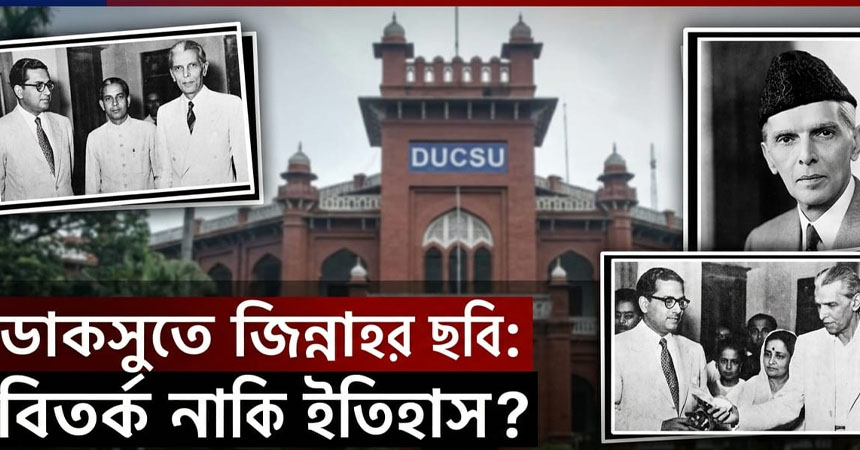
Jinnah died in 1948, but his position in favour of Urdu as the state language of Pakistan became a major point of conflict in what was then East Pakistan. Similarly, the role of the Jamaat-e-Islami and its student wing, the Islami Chhatra Sangha, during the 1971 Liberation War has been documented as part of the political history of the period.
Including a controversial individual or organisation in an archive does not necessarily mean endorsing its actions. An archive or museum can serve its purpose precisely by presenting difficult and contested parts of history along with reliable documents and historical context.
Political changes or electoral outcomes in the present cannot alter events that took place in the past. At the same time, historical debate should be based on evidence rather than political emotion.
Removing photographs or attempting to conceal controversial historical figures for political reasons does not contribute to a fuller understanding of history.
Educational institutions, including DUCSU, have a responsibility to present primary documents, historical statements and judicial records in their proper context. Materials ranging from Jinnah's statements and Dhirendranath Datta's language proposal to relevant records and judgments concerning the 1971 war can help future generations examine the country's history through evidence rather than selective narratives.
The central issue, therefore, is not whether a particular photograph should be displayed or removed. It is whether historical materials are being presented with enough context for people to understand why those figures remain controversial and what their documented roles were.
Diplomatic relations, contemporary politics or changing political circumstances should not determine which historical documents are remembered and which are forgotten. A credible approach to history requires preserving evidence, acknowledging its context and allowing future generations to examine the record for themselves.