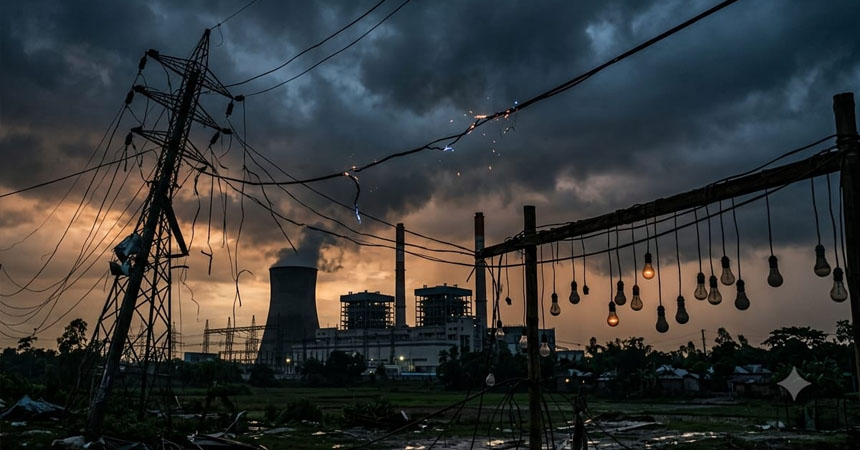
Some energy-sector observers argue that several decisions taken by interim government Chief Adviser Muhammad Yunus and his Energy Adviser Muhammad Fouzul Kabir Khan contributed significantly to the current crisis.
The debate has gained momentum as the country struggles with severe load-shedding despite having a power-generation capacity far exceeding current peak demand.
From reform promises to growing uncertainty
Although the previous Awami League government faced widespread allegations of irregularities and corruption in the power and energy sectors over the past 15 years, electricity supply remained relatively stable during much of that period.
After the political changeover on August 5, 2024, the interim government led by Yunus came to power promising major reforms in the energy sector.
However, critics say some of the policies adopted by the interim administration instead created uncertainty among investors and deepened financial pressure on the power sector.
One of the most controversial decisions was the cancellation of several renewable energy projects that had been in the pipeline.
Renewable projects cancelled
Soon after taking office, the interim government announced plans to repeal the 2010 Quick Enhancement of Electricity and Energy Supply (Special Provisions) Act, widely known as the indemnity law.
However, while previously signed agreements were retained, 37 government, private and joint-venture renewable energy projects reportedly awaiting implementation were cancelled.
The projects had a combined generation capacity of around 3,287 megawatts.
Critics questioned the policy rationale behind cancelling the projects while retaining earlier agreements.
Later, tenders were invited for 55 solar power plants with a combined capacity of 5,238MW. But the absence of sovereign guarantees reportedly discouraged both domestic and international investors.
Applications were received for only around 900MW, which critics say reflected a significant decline in investor confidence.
Mounting unpaid bills
Another major issue has been the accumulation of unpaid bills to power and fuel suppliers.
According to Bangladesh Power Development Board (BPDB) data cited by sector sources, when the new BNP-led government took office, outstanding payments owed to domestic and foreign power-sector suppliers had reached approximately Tk 45,000 crore.
Of that amount, around Tk 14,000 crore was reportedly owed to private oil-fired power plants.
Critics allege that during the roughly 18-month tenure of the interim administration, the government continued purchasing electricity and fuel on credit without clearing a substantial portion of its outstanding obligations.
Private power producers reportedly did not receive regular payments after July 2025, placing the incoming government under severe financial pressure.
Outstanding payments for coal and gas have also contributed to difficulties in keeping several major power plants operational, according to sector sources.
LNG agreement raises questions
Another controversial issue involves an agreement with US-based Argent LNG.
In January 2025, while attending the World Economic Forum in Geneva, the Bangladesh Investment Development Authority (BIDA) reportedly signed a non-binding agreement with Argent LNG.
Critics have questioned the arrangement, alleging that it was signed without adequate involvement of state-owned Petrobangla and without an open tender process.
Some energy experts have described the agreement as potentially contrary to national interests, although the precise implications of the non-binding arrangement would require examination of the relevant documents and contractual terms.
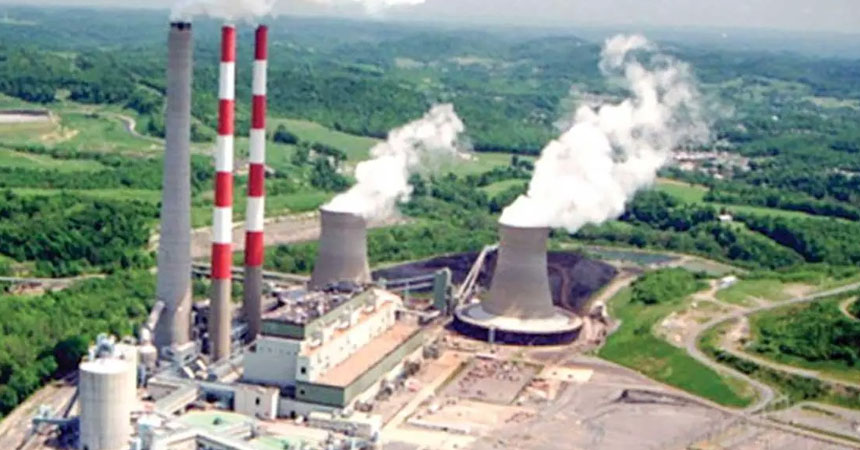
Meanwhile, despite longstanding opposition from environmental groups, the Yunus administration did not cancel or reconsider the Rampal coal-fired power plant, another issue that has remained controversial in Bangladesh's energy debate.
Power sector described as being in ‘ICU’
The current state of the electricity sector has been described in stark terms by Power and Energy Minister Iqbal Hasan Mahmud Tuku.
In a recent statement, he said that although the power sector had been in a fragile condition under the previous government, policy decisions and mismanagement during the interim administration had effectively pushed it into the “ICU”.
Tuku said the current government was taking steps to restore the Letters of Intent (LOIs) for 31 renewable energy projects that had been cancelled by the interim government, with the aim of rebuilding investor confidence.
Policy consistency seen as key
A section of energy experts believes the current crisis is the result of a combination of abrupt policy decisions, accumulated unpaid bills and the cancellation of major renewable energy projects without a clear long-term alternative.
They argue that the power sector requires a stable and predictable policy framework rather than sudden changes in investment and procurement policy.
Questions have also been raised over whether some of the decisions taken during the interim administration were the result of policy misjudgment or broader strategic considerations.
For Bangladesh, however, the immediate challenge is restoring reliable electricity and fuel supplies while addressing the financial liabilities accumulated across the sector.
Whether the current crisis is primarily the result of earlier structural weaknesses, decisions taken during the interim administration, or a combination of both remains a matter of political and economic debate.
What is increasingly clear is that restoring investor confidence, settling outstanding payments and adopting a coherent long-term energy strategy will be critical to bringing Bangladesh’s power sector out of its present crisis.