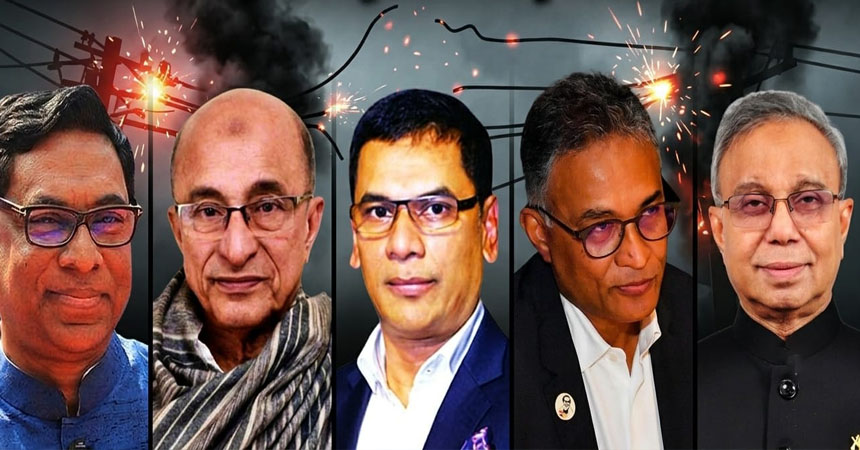
Energy shortages, unpaid bills owed to private power producers and longstanding policy weaknesses have been cited as key reasons behind the crisis. At the same time, allegations of widespread irregularities and corruption in the power sector during the previous Awami League government have come under renewed scrutiny.
Bangladesh has an installed electricity generation capacity of around 29,000 megawatts, according to sector figures. However, against peak demand of around 18,500MW, actual generation has at times fallen to between 12,000MW and 14,000MW, creating a daily shortfall of several thousand megawatts.
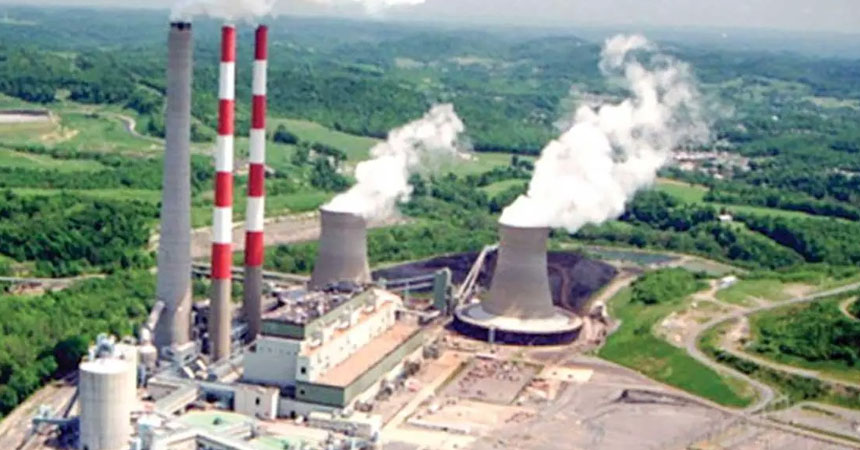
Of the country's 143 power plants, more than 71 are reportedly either shut down or generating below their capacity, according to claims by sector insiders.
Gas and coal shortages have emerged as major factors behind the current power crisis. Gas-fired plants require substantial supplies to operate at full capacity, but available gas supplies remain well below demand.
Critics allege that successive governments relied excessively on imported liquefied natural gas (LNG) instead of making sufficient investment in domestic gas exploration and drilling new wells.
That dependence has put additional pressure on the power sector amid higher international fuel prices and a shortage of US dollars. Coal-fired plants, including those at Payra and Rampal, as well as private oil-fired power plants, have also faced difficulties in securing fuel.
Large outstanding payments owed by the government to private power producers have further contributed to disruptions in electricity generation, according to industry sources.
The so-called “quick rental” power plants and capacity payments have remained among the most controversial issues in Bangladesh's electricity sector.
Critics allege that some power plants received capacity charges even when they were not generating electricity, in return for keeping their generation capacity available.
After the Awami League government came to power in 2008, the quick-rental system was expanded as an emergency measure to rapidly increase electricity generation. Critics have also alleged that accountability in decision-making and project implementation was weakened during the period.
According to critics, the system created opportunities for politically influential individuals and business groups to obtain substantial financial benefits from the power sector.
Several allegations have also emerged concerning projects and business activities during the tenure of former State Minister for Power and Energy Nasrul Hamid Bipu.
There have been claims that companies linked to members of his family benefited from projects involving electricity, energy, metering and solar power.
Allegations have also surfaced that influence was used in major projects, including the LNG terminal project at Matarbari, to favour certain companies.
Those allegations require independent and comprehensive investigation, according to people familiar with the sector.
Thousands of crores of taka in alleged irregularities have been reported in various prepaid metering and information technology projects of Dhaka Power Distribution Company (DPDC), Northern Electricity Supply Company (NESCO) and the Rural Electrification Board (REB).
According to the allegations, several influential business groups benefited from those projects.
There have also been allegations that family members of the former state minister were linked to some recently approved solar power projects. Claims have further been made of bribery at different stages of project approval.
Allegations have also emerged that money obtained through irregularities in the power sector was transferred abroad and used to acquire assets in different countries.
Various quarters have claimed that Nasrul Hamid and members of his family have substantial assets in countries including the United States, United Kingdom, United Arab Emirates, Canada, Singapore, Malta, Malaysia and the British Virgin Islands.
However, no definitive conclusion can be drawn regarding ownership of those assets, the source of the funds or allegations of money laundering without formal investigations by the relevant authorities and decisions by competent courts.
Questions have also been raised over the role of former Power Secretary and former Principal Secretary to the Prime Minister Dr Ahmed Kaikaus in major decisions and project implementation in the power sector.
Critics allege that financial irregularities and controversial decisions involving several major power-sector projects accelerated during his tenure.
The allegations, however, would require an impartial investigation to establish their veracity.
Against this backdrop, there are growing calls for a comprehensive review of policies adopted in the power sector over the past 15 years, as well as project implementation, capacity payments, fuel imports and agreements with private power producers.
Analysts say the current load-shedding is not merely the result of an immediate fuel shortage. Rather, it reflects the combined impact of years of inadequate planning, dependence on imports, financial pressure and allegations of irregularities in the power sector.
They warn that without impartial investigations, greater accountability and a thorough review of major projects and contracts, finding a sustainable solution to Bangladesh's electricity crisis could remain difficult.